Switch servers if a stream won't play. Your server and progress are remembered on this device.
 E1
17 min
E1
17 min 1. How to End Democracy in 60 Days - Death of Democracy Q1 1933
This episode of the history documentary series “Death of Democracy" covers Q1 1933 with Hitler’s appointment as chancellor, the Reichstag Fire, Reichstag Fire Decree, Enabling Act, rise of Nazi terror, Gleichschaltung, and media control, explaining how Weimar Germany’s democracy collapsed in just sixty days.
E2
17 min 2. How Legal Immunity Becomes Absolute Power - Q2 1933
In spring 1933, Nazi Germany shows how dictatorship becomes normal. This episode of Death of Democracy follows the regime’s second quarter in power, from the first state-organized antisemitic boycott to the destruction of free trade unions and the takeover of the courts. Step by step, democratic institutions are hollowed out through fear, legality, and propaganda. Death of Democracy reveals how tyranny doesn’t arrive overnight—it is made to feel ordinary.
E3
18 min 3. How to Make the Economy Look Better Than It Is - Q3 1933
Death of Democracy returns to Nazi Germany in Q3 1933. See Hitler enforce one‑party rule, sign the Reichskonkordat, tighten propaganda and press control, and expand work programs that feed rearmament. From July to September, follow the legal and cultural Gleichschaltung that normalizes terror and reshapes Europe’s future in this episode.
E4
15 min 4. How to Use a Tariff War to Disrupt the World - Q4 1933
In Q4 1933 Hitler pivots Nazi Germany from internal takeover to outward defiance. The London Economic Conference collapses and the tariff truce unravels, Hitler withdraws from the Disarmament Conference and the League of Nations—then stages the November 12 plebiscite and one‑party Reichstag election to claim the nation stands behind him. As Goebbels tightens propaganda and press control through the Editors’ Law (Schriftleitergesetz) and daily directives, the Winter Relief campaign turns “charity” into social pressure and Volksgemeinschaft theater. In December, Reichsbank president Hjalmar Schacht hardens the transfer moratorium to conserve foreign currency for raw materials and rearmament. Using contemporary voices, this episode shows how isolation, manipulation, and “unity” accelerate Europe toward a pre‑war era.
E5
18 min 5. How to Not Clean up the Swamp - Q1 1934
In Q1 1934, Nazi Germany reaches a breaking point. In this episode of Death of Democracy, Hitler codifies central control with the Law for the Reconstruction of the Reich, crushing what remains of federalism. Abroad, the German–Polish Non‑Aggression Pact (January 26, 1934) shocks Europe while rearmament continues behind a diplomatic mask. Inside the Reich, the real story is the power struggle: SA chief Ernst Röhm demands a “people’s militia,” forcing Hitler to choose the Reichswehr over the stormtroopers—setting the stage for the Night of the Long Knives. As Himmler expands SS power and Goebbels tightens the propaganda screw, even historic liberal papers like the Vossische Zeitungdisappear. Meanwhile, unemployment falls toward three million amid manipulated statistics, wage freezes, shortages, and a looming foreign‑currency crisis. Watch, then comment: what warning signs do you see when “order” is used to justify permanent power?
E6
17 min 6. How to Serve Retribution and Become Popular - Q2 1934
In the spring of 1934, Nazi Germany stands on the edge of internal collapse. In this episode of Death of Democracy, we follow the escalating conflict between Adolf Hitler, the SA stormtroopers, and the German Army that culminates in the Night of the Long Knives. As economic cracks appear behind the Nazi “recovery,” Joseph Goebbels launches propaganda campaigns against critics while Heinrich Himmler expands SS power over the Gestapo. When Vice-Chancellor Franz von Papen publicly challenges the regime, Hitler moves decisively. On June 30, 1934, the Nazi leader unleashes a purge that eliminates Ernst Röhm, the SA leadership, and political rivals—consolidating absolute power. Using contemporary voices from Martha Dodd, Victor Klemperer, and underground SPD reports, this episode explores how terror, propaganda, and political maneuvering reshaped Germany in just a few months—and paved the way for dictatorship.
E7
17 min 7. How to Go From President to King - Death of Democracy 07 - Q3 1934
In Q3 1934, Adolf Hitler completed the transformation of Nazi Germany from a dictatorship into an absolute Führer state. In this episode of Death of Democracy, we examine the aftermath of the Night of the Long Knives, the destruction of the SA leadership, and the consolidation of Hitler’s personal rule after the death of President Paul von Hindenburg.
E8
16 min 8. How To Indoctrinate the Children - Q4 1934
In this episode of Death of Democracy, we examine Germany in the final quarter of 1934, as Adolf Hitler tightens his grip on power after Hindenburg’s death and prepares the Reich for the next stage of Nazi rule. Behind a façade of order, the regime accelerates secret rearmament, deepens propaganda and youth indoctrination, pushes Jews further out of public life, and turns universities, schools, and culture into instruments of ideological control. This documentary explores Nazi Germany in late 1934 through the looming Saar plebiscite, the growth of the Hitler myth, rising public frustration with local Nazi officials, and the regime’s deeper preparation for dictatorship, expansion, and war. If you are interested in Hitler, Nazi propaganda, rearmament, antisemitism, the Saar vote, and the collapse of democracy in Germany, this episode provides the critical context.
E9
16 min 9. How Radio Killed Democracy - Death of Democracy 09 - Q1 1935
Radio did not just spread Nazi propaganda — it helped make dictatorship feel normal. This episode of Death of Democracy follows the decisive first quarter of 1935: the Saar vote, Göring’s admission of the Luftwaffe, Hitler’s open defiance of Versailles, and the growing power of the Gestapo. While Nazi propaganda promised pride, unity, and national revival, civil liberties were collapsing, Jews were being isolated, and Germany was being prepared for war. How did propaganda become so effective? How did radio help turn fear, resentment, and nationalism into obedience? And how did so many people support a regime that was already dismantling the rule of law? This is the story of how radio helped kill democracy in Nazi Germany.
E10
16 min 10. How To Distract From the Economy - Q2 1935
June 1935: Adolf Hitler reassures the world with promises of peace - while secretly accelerating Germany’s path to war. in this episode of Death of Democracy, we examine how Hitler manipulated international diplomacy and domestic opinion in the second quarter of 1935. From the collapse of the Stresa Front to the signing of the Anglo-German Naval Agreement, foreign leaders were drawn into a dangerous illusion. Meanwhile, inside Germany, antisemitic violence escalated, press censorship intensified under Joseph Goebbels, and economic realities worsened under Hjalmar Schacht’s policies. Drawing on firsthand accounts from William L. Shirer and Victor Klemperer, this episode reveals a society caught between fear, propaganda, and growing dictatorship. How did Hitler convince both his people and world leaders that he wanted peace - while preparing for war?
E11
18 min 11. How to Legalize Scapegoating - Q3 1935
Nuremberg Laws explained: how Nazi Germany turned antisemitic street violence into state policy in 1935. In this episode, Spartacus Olsson reports from Berlin on the third quarter of 1935, when the Kurfürstendamm riots, Goebbels’ propaganda campaigns, and Hitler’s regime culminated in the passage of the Nuremberg Laws. This historical analysis breaks down how the Reich Citizenship Law and the Law for the Protection of German Blood and German Honor stripped German Jews of civil rights, redefined citizenship around “German blood,” and replaced chaotic mob violence with systematic bureaucratic persecution. The video also explores the role of Joseph Goebbels, the SA, the coming 1936 Berlin Olympics, Leni Riefenstahl’s Triumph of the Will, worsening shortages in the Nazi economy, and the collapse of democracy, human rights, and freedom of expression in the Third Reich.
E12
17 min 12. How to Tank the Economy for War - Q4 1935
Nazi Germany in late 1935 was becoming more ruthless, more militarized, and more dangerous. In this episode, Spartacus Olsson reports from Berlin on the final months of 1935, when Hitler’s regime tightened its grip through food shortages, propaganda, rearmament, and the continued implementation of the Nuremberg Laws. As ordinary Germans faced rising prices, scarce meat and butter, and mounting pressure to sacrifice for the Reich, the Nazi state pushed its “guns before butter” economy even further. We examine the “fat gap,” Winter Relief, Eintopfsonntag, and the growing burden placed on German families while resources were diverted to war preparation.
E13
17 min 13. How to Stage (and Win) an International Crisis - Q1 1936
In early 1936, Adolf Hitler took one of the greatest risks of his rule—sending German troops into the demilitarized Rhineland in direct violation of the Treaty of Versailles and the Locarno Pact. It was a gamble that could have triggered immediate war. Instead, it became a turning point that transformed Hitler from a powerful dictator into a figure many Germans saw as a national savior.
E14
17 min 14. How to Declare a Live Person Legally Dead - Q2 1936
In Q2 1936, Adolf Hitler consolidated power after the Rhineland gamble, tightening the machinery of dictatorship while projecting strength abroad. As Hermann Göring took control of Germany’s economic lifelines and Heinrich Himmler centralized the police, the regime accelerated its transformation into a fully integrated police state. Behind Olympic pageantry and propaganda triumphs like Max Schmeling’s victory, the Nazi system deepened repression. Courts enforced the Nuremberg Laws with chilling logic, reducing Jewish citizens to a state of “civil death,” while Joseph Goebbels expanded total control over media and public discourse.
E15
17 min 15. How to Make Nazi Germany Look Normal - Q3 1936
Berlin, September 30, 1936. Under the Olympic flame, Nazi Germany staged one of the most successful propaganda spectacles of the twentieth century. Foreign visitors saw order, ceremony, technology, pageantry, and athletic triumph. But behind the facade, the regime hid antisemitic persecution, rounded up Sinti and Roma, intensified police repression, intervened in the Spanish Civil War, and moved toward a massive new war economy. In this episode, Spartacus Olsson looks back at the third quarter of 1936: the Berlin Olympics, Jesse Owens’ victories, Hitler’s secret war memorandum, the Four-Year Plan, Nazi propaganda, Germany’s growing involvement in Spain, and the dictatorship’s attempt to sell peace to the world while preparing for conquest. The Olympics gave Hitler international validation. The Four-Year Plan revealed what he truly intended.
E16
17 min 16. How Hitler Indoctrinated a Generation - Q4 1936
How did Nazi Germany seize control of its youth by the end of 1936? In this Q4 1936 episode, Spartacus Olsson traces the Hitler Youth Law, the Four-Year Plan, Winterhilfswerk, the Anti-Comintern Pact, Goebbels’s attack on criticism, and the tightening exclusion of German Jews. Berlin, December 31, 1936. The Nazi regime did not need another single dramatic coup. It connected the household, the factory, the school, the street collection, the newspaper, and the foreign threat into one system of mobilization. This episode covers how the Law on the Hitler Youth declared all German youth organized within the Hitler Youth; how the Four-Year Plan redirected recovery toward rearmament and autarky; how charity became mandated patriotic ritual through Winterhilfswerk; how anti-Bolshevik propaganda linked Spain, Japan, Italy, and Germany; and how Jewish Germans were pushed further into isolation through administrative humiliation and police control.
E17
19 min 17. How the Nazis Got Rich Preparing Germany for War - Q1 1937
Berlin, March 31, 1937. Adolf Hitler’s regime appears stronger than ever. The Enabling Act is extended for another four years, the civil service is bound more tightly to Hitler personally, and Germany formally rescinds its signature from the war-guilt clause of the Versailles Treaty. But behind the speeches about honor, work, and national revival, another transformation is underway. In the first quarter of 1937, Nazi Germany moves deeper into an economy built around rearmament, Party patronage, racial exclusion, corporate privilege, and theft. The new German Corporation Law weakens ordinary shareholder control and strengthens management boards. Industrial giants profit from military preparation. Jewish property becomes a field of extortion and enrichment. Hitler himself grows wealthy through book royalties, image rights, hidden payments, and political slush funds.
E18
16 min 18. How Hitler Tested His Next War in Spain - Q2 1937
In Spain, the Condor Legion helps Franco’s Nationalists and the bombing of Guernica gives the world a terrifying preview of modern aerial terror. At home, the regime escalates its assault on the Catholic Church, begins the purge of “degenerate art,” tightens the link between courts and concentration camps, and hides rearmament behind spectacles of economic success. This episode of Death of Democracy looks at Q2 1937: the quarter when Nazi Germany normalized aggression abroad while deepening tyranny at home.
E19
18 min 19. How to Make Dissent Disappear - Q3 1937
In 1937, Nazi Germany moved from controlling politics to controlling thought itself. Churches, artists, workers, and dissenters all came under attack. Berlin, September 1937. From the outside, Germany can seem strangely quiet while the rest of the world slides deeper into war, civil conflict, and authoritarianism. But inside the Reich, the Nazi state is tightening its grip on the last spaces where dissent can still exist. This quarter, the Gestapo arrests Pastor Martin Niemöller and intensifies the attack on the Confessing Church. The regime opens the House of German Art in Munich, then stages the infamous “Degenerate Art” exhibition to mock, vilify, and destroy modernist culture. The SS establishes Buchenwald near Weimar, forcing prisoners to build their own prison. Meanwhile, Göring’s new state industrial empire and the Nuremberg “Rally of Work” reveal a society being reorganized for war.
E20
19 min 20. How to Make War Inevitable - Q4 1937
By late 1937, Nazi Germany’s rearmament economy had trapped itself. Autarky was failing. Hjalmar Schacht was pushed aside. Göring’s Four-Year Plan dominated economic policy. And at the secret Hossbach meeting of November 5, Hitler turned economic impossibility into an argument for territorial conquest. This episode covers Q4 1937: the Hossbach Memorandum, Schacht’s resignation, the Anti-Comintern alignment, Lord Halifax’s visit, Himmler’s police-state consolidation, the December “Preventive Crime Fighting” decree, and the antisemitic propaganda exhibition Der Ewige Jude. The argument is not that war was metaphysically inevitable. It is that the Nazi regime built an ideological, economic, and police-state machine that made war look increasingly necessary to its own leadership. This is a historical analysis of Nazi dictatorship, antisemitic propaganda, and war planning. It condemns Nazism and uses extremist material only for educational and documentary context.
E21
20 min 21. How to Steal a Country Without a European War - Q1 1938
In early 1938, Adolf Hitler turned a military scandal into personal control over the Wehrmacht — and within weeks used that power to pressure, invade, and annex Austria in the Anschluss. This episode follows the Blomberg-Fritsch crisis, Hitler’s February 4 command takeover, the Berchtesgaden ultimatum, Schuschnigg’s failed plebiscite gamble, the German invasion of March 12, and the terror that followed in Vienna. This was not just a border crisis. It was the moment Nazi Germany moved from internal dictatorship to open territorial expansion. Britain and France did not intervene, Austria was erased as a sovereign state, and Hitler’s next target — Czechoslovakia — was already coming into view.
E22
20 min 22. How Hitler Targeted Czechoslovakia - Q2 1938
In this episode of Death of Democracy, Spartacus Olsson reports from Berlin at the end of Q2 1938, as the Nazi regime fuses foreign-policy intimidation with domestic repression. After the Anschluss, Hitler pressures Czechoslovakia over the Sudetenland, but the May Crisis exposes that Germany may not yet be ready for war. Humiliated, Hitler secretly issues a revised Case Green directive: Czechoslovakia is to be smashed by military action.
Follow the deadliest conflict in human history in real time, week by week, blow by blow.
Genres: Documentary, War & Politics
Stars: Indy Neidell
 TV
TV
Trust Me: The False Prophet
2026
 TV
TV
The American Revolution
2025
 TV
TV
Churchill at War
2024
 TV
TV
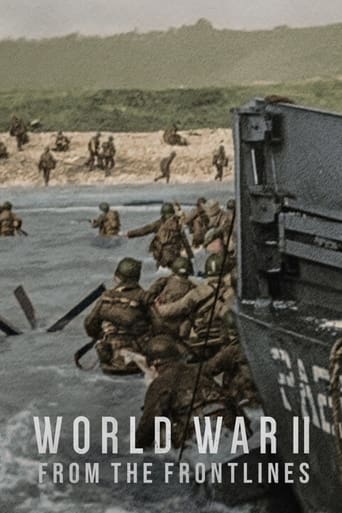
World War II: From the Frontlines
2023
 TV
TV
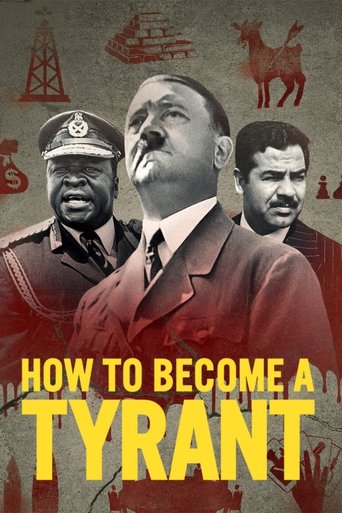
How to Become a Tyrant
2021
 TV
TV
History 101
2020
 TV
TV
Greatest Events of World War II in Colour
2019
 TV
TV
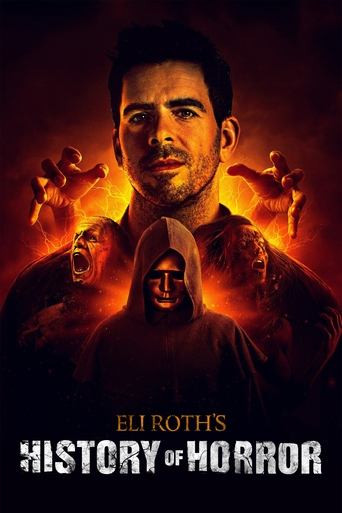
Eli Roth's History of Horror
2018
 TV
TV
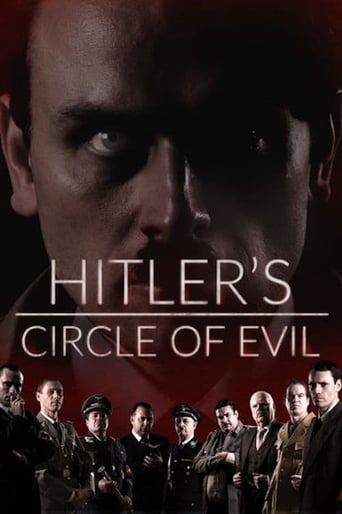
Hitler's Circle of Evil
2018
 TV
TV
The Vietnam War
2017
 TV
TV
Five Came Back
2017
 TV
TV
Oliver Stone's Untold History of the United States
2012
